Posts

Showing posts with the label British

Fragments of Fame - Cigarette Cards & Forgotten Film Stars

Image
One morning last summer, while watching The Wicked Lady , I found myself intrigued by the mischievous glint of the actress who'd been cast in the role of the supporting role of  Lady Henrietta Kingsclere, sister-in-law to Margaret Lockwood's character in the film. A quick check of the ever-reliable (except when it's not) Wikipedia advised me her name was Enid Stamp Taylor, a name hitherto unfamiliar to me. After first making her mark in Hitchcock's Easy Virtue,  Taylor had enjoyed moderate success as a leading lady in British films of the 1930's before settling into smaller parts.  As it happens The Wicked Lady  was her penultimate picture; she died as a result of injuries sustained in a fall (most likely caused by a seizure) just a couple of months after it was released, aged just 42.  It was when I ran an image search for Taylor on Google that my attention was grabbed not by a photograph, but an illustration of her that adorned an old cigarette card. Noth...
In Fear (UK, 2013); Dir. Jeremy Lovering

Image
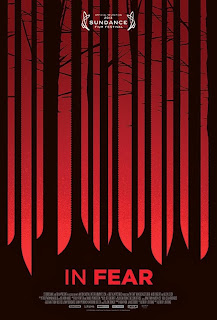
Horror, perhaps more than any other, is a genre of simple pleasures. The same tried and tested formulas can be repurposed ad infinitum  with a reasonable chance of decent renumeration, even in cases where a franchise should have long since succumbed to the law of diminishing returns. For the discerning fan of horror cinema the devil is in the detail; how skilfully does a film plunder those too-familiar old tropes and, if not give the appearance of being fresh, at least demonstrate enough command of the material that the viewer doesn't think about it too much? So to point out the influences on Jeremy Lovering's debut feature film would both spoil the plot and be somewhat glib, because there's no question that In Fear is as smartly directed piece of work that deserves an audience. Tom (Iain De Castecker) and Lucy (Alice Englert), a young couple only a fortnight into their relationship, travel to rural Ireland for a music festival. En route to a nearby hotel they sto...

In Search of Vanessa Howard

Image
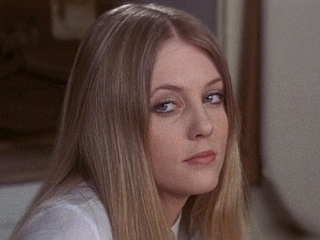
About eight years ago I picked up a copy of a film called ‘MUMSY, NANNY, SONNY AND GIRLY’ (1970), a curious horror comedy about a dysfunctional family with a penchant for macabre games. Although she didn’t receive top billing it was the pretty, vivacious young actress playing the eponymous Girly who really made the piece. Her name was Vanessa Howard and she had the aura of a star. Howard was born in Shoreham-by-Sea, Sussex, on 10th October 1948. Originally named Vanessa Tolhurst she was orphaned by the age of three and she and her older sister were raised by adoptive parents . Both girls were keen performers and for a time Vanessa attended the Phildene Stage School in London. According to later press sources this led her screen debut in Judy Garland's last picture, I COULD GO ON SINGING (1963), although I've never been able to conclusively identify her in the released version. Leaving school at fifteen she declined the opportunity to join her sister at the Guildhall ...

Storage 24 (UK, 2012); Dir. Johannes Roberts

Image
Well, it finally happened: I got to see a Johannes Roberts film at my local cinema. If somebody had told me this when I sat shaking my head in dismay at the singular incompetence of Sanitarium I wouldn't have credited it. Hopefully it's not the end of the journey but he appears to have arrived somewhere. Storage 24 is a nuts and bolts sci-fi exploitation movie. The premise is a simple one: a US cargo plane has crashed somewhere in London, possibly shot down, for reasons unknown. Part of the wreckage has landed in the grounds of the titular secure storage warehouse, including a mysterious container which has broken open, releasing a nasty monster which seeks refuge in the building. It also causes a power failure, meaning that those who happen to venture inside - including Noel Clarke, the girlfriend he's just acrimoniously split from and attendant friends - find themselves trapped in there with the beast. We've seen it all many times before of course, from T...

AFED #88: Behind the Headlines (UK 1956); Dir. Charles Saunders

Image
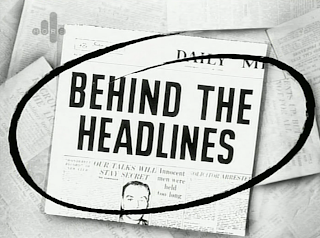
I'm going to have to be quick because this one was so forgettable I'm afraid it might slip from the memory entirely. Behind the Headlines is a short (just 65 minutes) second feature that was presumably produced as a 'quota quickie' ; low-budget British films made under the edict of the 1927 Cinematograph Films Act with the intention of stimulating the indigenous industry. Between 1930 and 1960 (when the Act was repealed) thousands of quickies were made, mostly deemed to be of lamentable quality. Personally I think there are some real gems amongst them and hopefully I'll be able to look at some more in the coming weeks and months. In fact Behind the Headlines is by no means a bad example and certainly benefits from higher production values than were typical, but there's nothing remarkable either. It starts promisingly; a platinum blonde bombshell takes a phone call at her flat from somebody she's apparently blackmailing and shortly after is murdered ...

AFED #71: Cold Light of Day (UK, 1989); Dir. Fhiona-Louise

Image
Sooner or later most infamous real-life crimes receive a dramatisation, but the timing of such treatments can vary enormously. Some cases, such as that of the Moors Murders, are granted a respectful distance (although See No Evil finally told the story for tv in 2006). Others, like that of Harold Shipman, can make it to the screen in just a couple years . American readers will know that over there the turnaround can be even quicker. Perhaps it owes something to the degree to which ordinary, middle-class society is offended or horrified by the crimes, or to what extent they simply feel a morbid curiosity. Film or television executives will seldom commission such a drama if there's any risk of a public backlash, even if it rarely equates to a drop in revenue (far from it). And occasionally independent producers have taken real-life crimes and crafted them into grimly effective films. One of the most notable (if sadly neglected) examples is The Black Panther (1977), a criminal...

AFED #70: The Great McGonagall (UK, 1974); Dir. Joseph McGrath

Image
Although The Goon Show represented something of a watershed for post-war comedy, it's probably not unfair to describe Spike Milligan's output thereafter as variable. By all accounts his Q sketch series contained flashes of genius (and was shamelessly ripped off by the Monty Python team) but there was also the infamous Johnny Speight-penned sitcom Curry and Chips , in which Milligan blacked up to play an Indian immigrant working in a factory. Unlike his pal Peter Sellers, Milligan was more of a comedy writer than actor, but the pressure to be consistently funny and solicit the approval of one's peers must be hugely exacting. Small wonder Spike suffered several nervous breakdowns and struggled with depression. Perhaps that's also why he was drawn to the tragi-comic figure of William Topaz McGonagall , the nineteenth century Scottish poet and actor whom he depicted in a 1974 film. McGonagall, an aspiring laureate whose hopelessly mediocre, yet seemingly earnest,...

AFED #61: The Man Without a Body (UK, 1957); Dir. Charles Saunders & W. Lee Wilder

Image
Hidden amongst the quatrains of Nostradamus's celebrated Prophecies , published in 1555, is a curious passage which has long baffled scholars: In London, many years from now I shall awaken, disembodied, in a physician's chamber At the behest of a rich and powerful man. But he and I, we shall not be friends. LOL . Baffling indeed, but it seems unlike many of the 'great' seer's predictions it may have some shred of credence. A little over 400 years later came the extraordinary dramatisation of an incident that rocked the foundations of science to its very core... This is the remarkable account of Karl Brussard (George Coulouris ), a massively successful entrepreneur who discovers he's dying from a brain tumour. It's a tragic waste because Brussard , by his own modest admission, is such a fine physical specimen (!). Fortunately Brussard's doctor has heard of a surgeon in London who's been conducting some exciting research in brain transplantation. Bu...

AFED #58: The Admirable Crichton (UK, 1957); Dir. Lewis Gilbert

Image
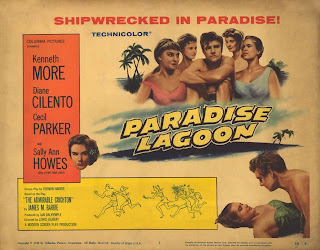
I didn't hold particularly high hopes for today's film, The Admirable Crichton (known in the US as Paradise Lagoon , lest the poster cause any confusion). It was an arbitrary late choice and seemed likely to be a stilted fifties comedy that hadn't aged well. It certainly belongs to a different era but proved surprisingly enjoyable. An adaptation of J.M. Barrie's 1902 play, Kenneth More stars as Crichton, the resourceful butler with a impeccable sense of duty and his place in the social hierarchy. Whilst serving his master the Earl of Loam on board the Earl's luxury yacht in the Pacific, they are forced to abandon boat and become marooned on a desert island. It's swiftly evident that the Earl and his family haven't a clue how to cope for themselves and it's up to Crichton to take charge. We jump forward two years and the social order has been completely reversed. Crichton is now the top dog and incontestable alpha male, what's more the Earl and ...

AFED #52: Hush (UK, 2009); Dir. Mark Tonderai

Image
I've never been a driver but from what I understand for the majority of motorists the greatest challenges they are likely to face are negotiating traffic jams, speed cameras and adverse weather conditions. There are accidents of course and even the occasional road rage incident, but providing you have some basic common sense they seem to be few and far between. In the cinema, on the other hand, the unsuspecting traveller is never more than one wrong turning away from Hell's Highway. As with many fairy tales and folklore, mysterious strangers and the dread hand of fate are always waiting to strike and hurl characters into circumstances the like of which they never believed possible. Being a cheap and convenient setting it's long been a staple of 'B' movies; perhaps the archetypal example being the cult noir Detour (1945), in which Tom Neal's hapless piano player finds himself plunged into a surreal confluence of misfortune while hitchhiking his way to Califo...

AFED #47: Beat Girl (UK, 1960); Dir. Edmond T. Gréville

Image
Ever since Jack Kerouac and his cohorts first coined the term, 'Beat' has held an ambivalent status. It was derived from the slang talk of hustlers and addicts, an epithet for their abjection; but for Kerouac it also stood for 'beatitude'; a certain state of grace. As it was appropriated and commodified by the mainstream, that spiritual aspect became subordinate to the pursuit of pleasure and as mitigation for pretentious excess. The 'beatnik' was born; a subculture for the kids who dug the Bohemian coolness of jazz culture. They fancied themselves as more sophisticated than 'square' society and made sure everybody knew it. The beatnik cliche: goatee beards, shades, turtle-neck sweaters, the coffee shops where cool cats would recite jazz poetry, was ripe for parody and exploitation by the movies. In Funny Face (1957), Audrey Hepburn discovers pseudo-intellectual pretensions are no match for Fred Astaire's old school charm. A couple of years late...

AFED #41: The Halfway House (UK, 1944); Dir. Basil Dearden

Image
It's sometimes inexplicable how certain films become completely forgotten. Unless you're a devotee of old British horror/supernatural films there's a good chance you've never heard of The Halfway House , yet this Ealing drama prefigures their more celebrated Dead of Night and one suspects its musing on our final destinies could even have influenced Powell and Pressberger's A Matter of Life and Death . Ten people of varying backgrounds are drawn to spend the weekend at a remote guest house in rural Wales. They're a cross section of British wartime society: a famous conductor who has just months to live, a feuding middle-class couple and their adolescent daughter, a retired seaman and his wife still grieving over the death of their son in conflict, a neutral Irishman and his fiancee, a deserter recently released from prison and a racketeer who's made a fortune from the war. Their hosts are the Halfway House's enigmatic innkeeper Rhys (Mervyn Johns) a...

AFED #37: Brighton Rock (UK, 2010); Dir. Rowan Joffé

Image
When I heard there was a fresh adaptation of Brighton Rock my first thought, probably like many others was, "Why?". The Boulting Bothers' original is one of British cinema's sacred texts; a dark, brooding film that dared to explore territory other work from the period baulked and retains its vitality after more than sixty years. But it's ridiculous to be so precious. The original is still there regardless of whether the new rendition fails to match its standards and there's always the possibilty, however remote, it will either improve or at least bring a fresh perspective to some of the themes of Graham Greene's novel.  So, having thrown caution to the wind, I entered the cinema with two questions. First, how would Sam Riley's depiction of the vicious young gangster Pinkie compare with Dickie Attenborough's career-making portrayal? Second, how would this version choose the interpret the most sadistic ending in all of English literature? But...